
Cell Theory in Biology – Definition, History & Explanation
Cell Theory Explained: Complete Notes for NEET 2026 & Board Exams
🔬 Cell Theory is the cornerstone of modern biology. For NEET aspirants, this topic isn’t just about memorizing names—it’s the foundation for understanding life processes. In this guide, we break down the history, principles, exceptions, and key comparisons you need to score full marks. We’ve also included high-yield NEET facts, memory tricks, and diagrams. Let’s decode the cell theory like a pro! 🧠
📖 Table of Contents – Cell Theory Explained
- 1. Historical Timeline of Cell Theory
- 2. Classical & Modern Cell Theory (3+4 principles)
- 3. Exceptions to Cell Theory
- 4. Prokaryotic vs Eukaryotic – Comparison
- 5. Basic Cell Structures (Membrane, Nucleus, Cytoplasm)
- 6. 🔥 Important Points for NEET
- 7. ⚠️ Common Mistakes Students Make
- 8. ⚡ Quick Revision Summary
- 9. ❓ Frequently Asked Questions (NEET)
- 10. 📚 Must-have Notes & References
📜 1. Historical Timeline of Cell Theory
Understanding the discovery of cells is a classic NEET favorite. Let's walk through the key contributors:
- 1665 – Robert Hooke: Observed cork cells under a microscope and coined the term “cell” (from Latin cella = small room).
- 1674 – Antonie van Leeuwenhoek: First to observe living cells (bacteria, protozoa) – called them “animalcules”.
- 1831 – Robert Brown: Discovered the nucleus in orchid cells.
- 1838 – Matthias Schleiden (botanist): Proposed that all plants are composed of cells.
- 1839 – Theodor Schwann (zoologist): Extended the idea to animals, concluding that all living things are made of cells.
- 1855 – Rudolf Virchow: Added the third tenet: “Omnis cellula-e cellula” (all cells arise from pre-existing cells).
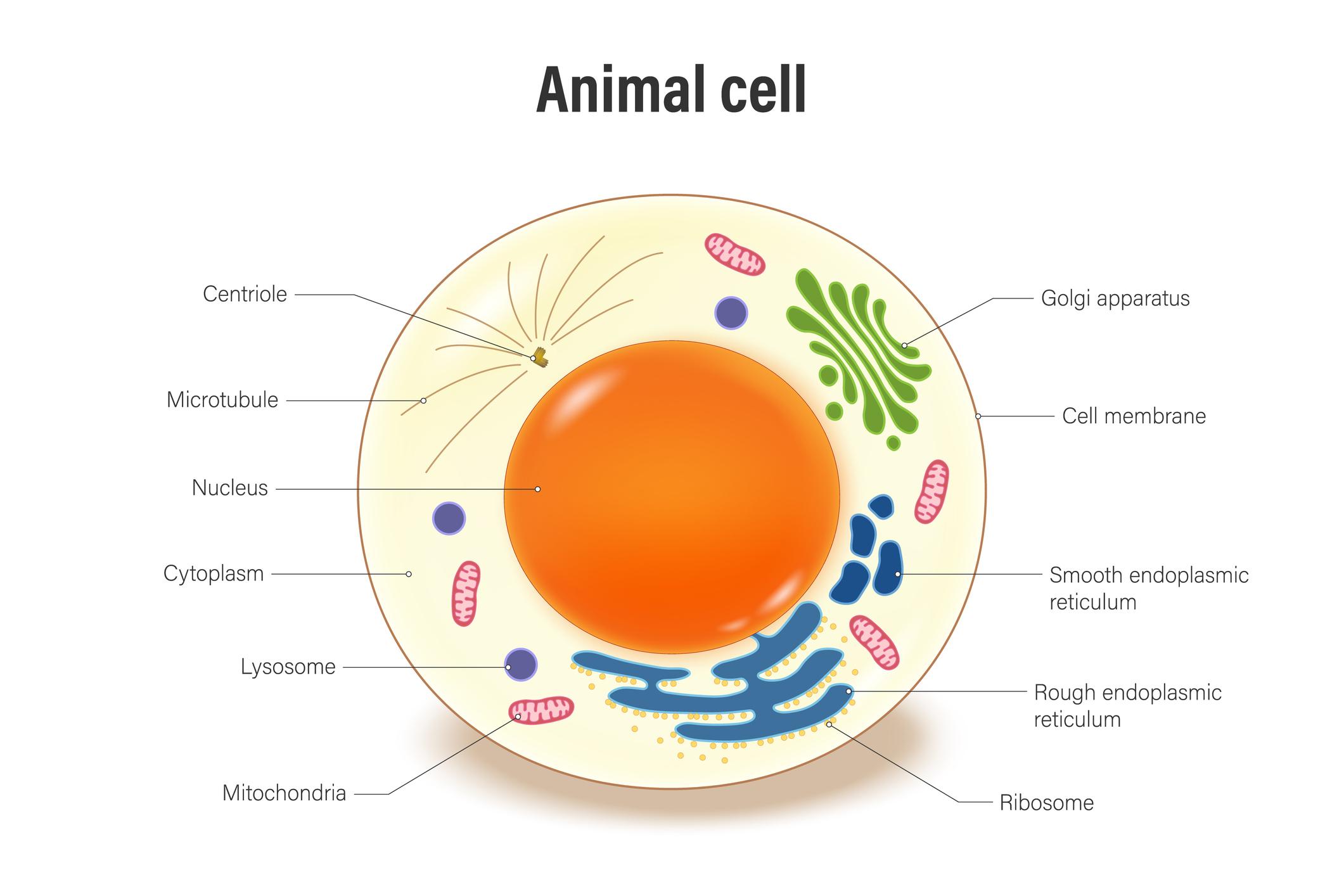
🔬 Fig 1.0 – Robert Hooke’s microscope view vs modern animal cell diagram
🧪 2. Classical & Modern Cell Theory (Core Principles)
✔️ All living organisms are composed of one or more cells.
✔️ The cell is the basic structural and functional unit of life.
✔️ All cells arise from pre-existing cells (Virchow’s addition).
Modern additions (cell theory expanded):
- Cells contain hereditary information (DNA) passed from cell to cell.
- All cells have similar chemical composition (proteins, lipids, nucleic acids, carbohydrates).
- Energy flow (metabolism) occurs within cells.
- Cells of multicellular organisms are specialized for specific functions.
🚫 3. Exceptions to Cell Theory (Very Important for NEET)
Not everything fits perfectly into cell theory. Remember these exceptions:
| Exception | Reason | NEET fact |
|---|---|---|
| Viruses | Acellular – lack independent metabolism; require host cell to replicate. | Considered “living” only inside host; have either DNA or RNA. |
| Viroids & Prions | Infectious RNA particles (viroids) or misfolded proteins (prions) – no cellular structure. | Prions cause mad cow disease; viroids affect plants. |
| Mitochondria & Chloroplasts | Semi-autonomous organelles with their own DNA and ribosomes – but not independent cells. | Support endosymbiotic theory. |
| First cell origin | The first cell could not have arisen from a pre-existing cell (violates Virchow’s maxim). | Abiogenesis vs biogenesis – origin of life debate. |
🦠 4. Prokaryotic vs Eukaryotic Cells (Comparison with Diagrams)
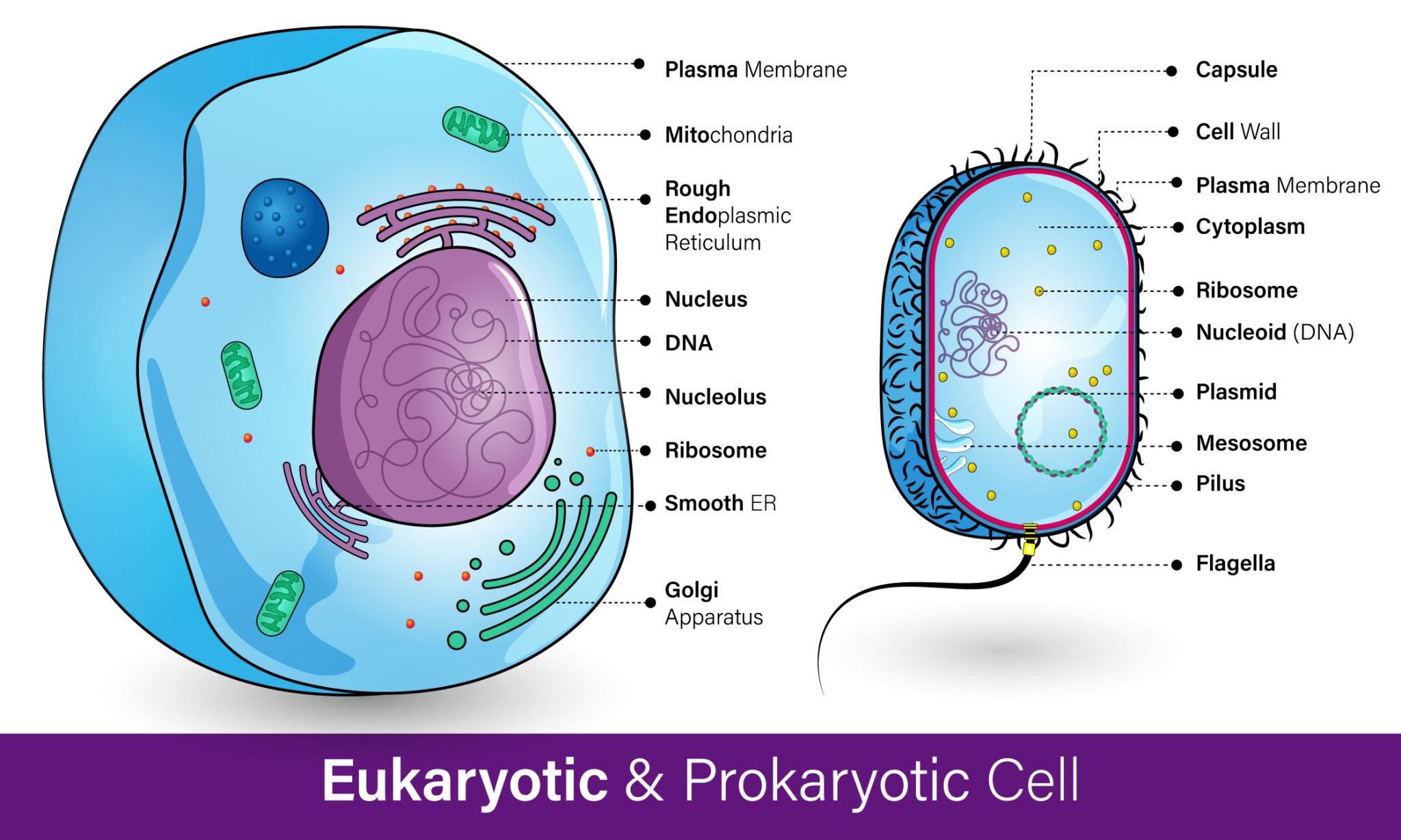
📊 Fig 4.1 – Clear comparison: Prokaryotic (bacteria) vs Eukaryotic (animal cell)
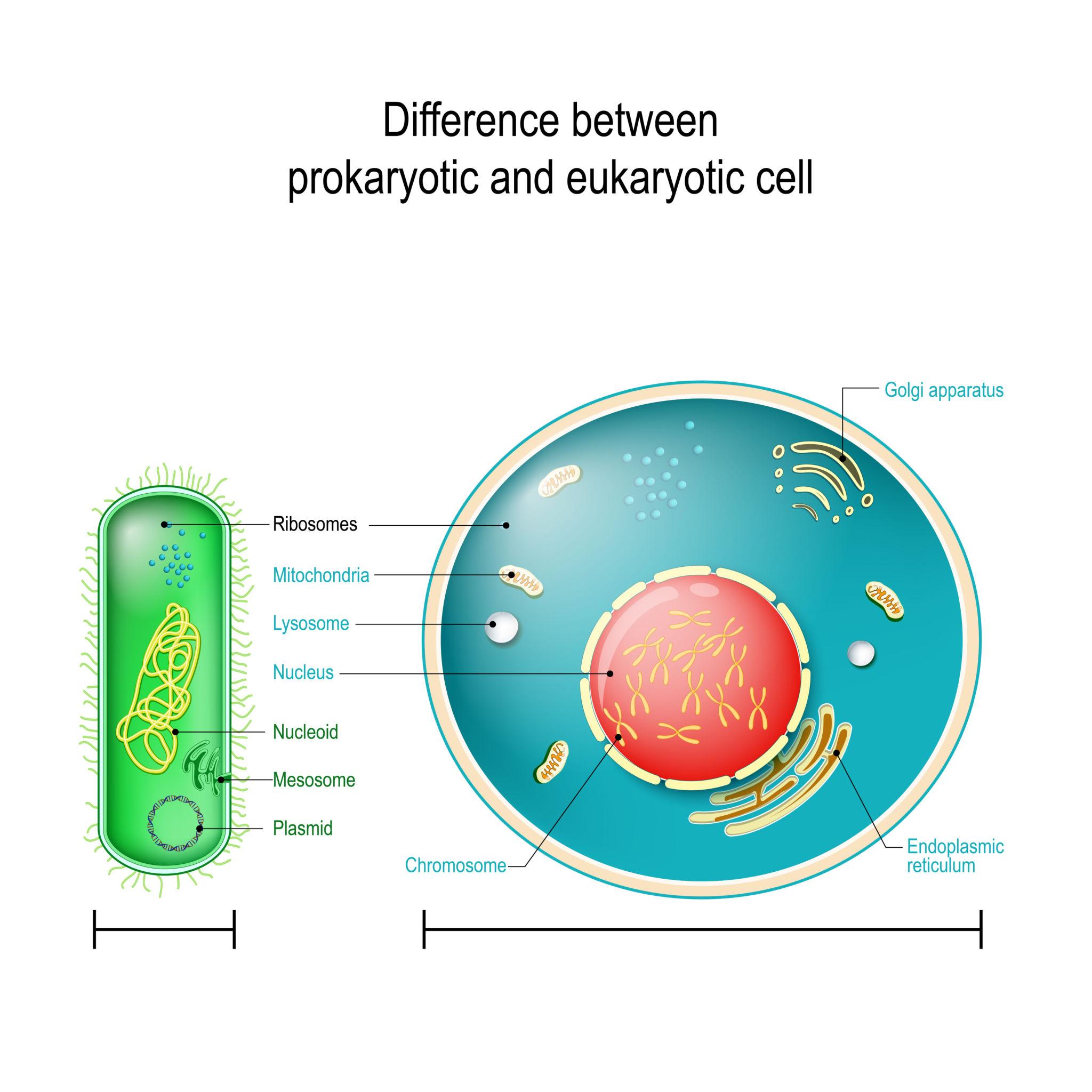
📊 Fig 4.2 – Visual differences between prokaryotic and eukaryotic cells
| Feature | Prokaryotic cell | Eukaryotic cell |
|---|---|---|
| Nucleus | Absent (nucleoid region) | Present with nuclear envelope |
| Membrane-bound organelles | Absent | Present (ER, Golgi, mitochondria, etc.) |
| Ribosomes | 70S | 80S (cytoplasm) and 70S (organelles) |
| Cell wall composition | Peptidoglycan (in bacteria) | Cellulose (plants), chitin (fungi), or none (animals) |
| DNA arrangement | Circular, naked | Linear with histones |
| Examples | Bacteria, Archaea | Protists, fungi, plants, animals |
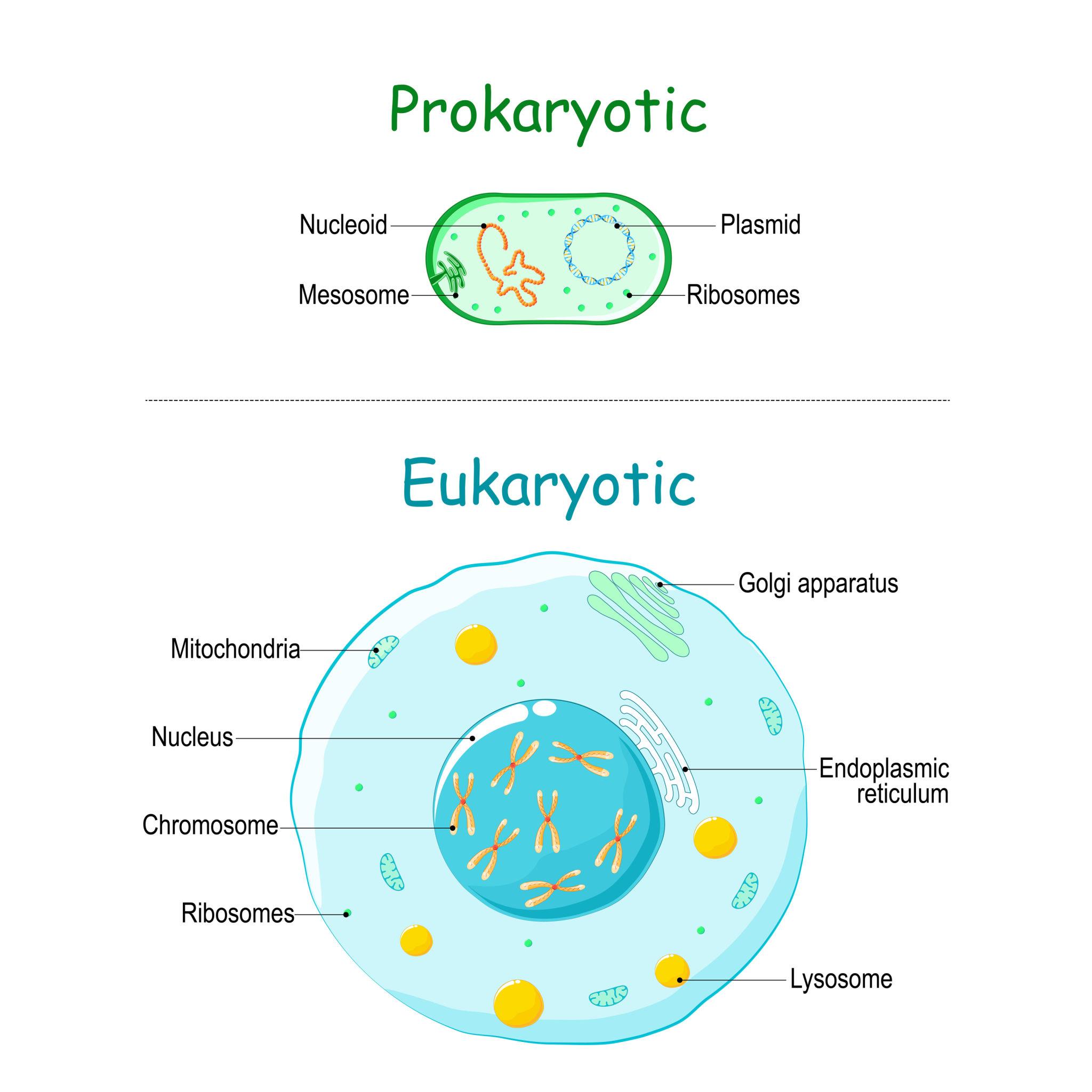
📊 Fig 4.3 – Detailed illustration with labelling (must know for diagram-based MCQs)
🔬 5. Basic Components of a Cell (Membrane, Cytoplasm, Nucleus)
Though cell theory defines the cell as a unit, its internal structures confirm its functionality. Key parts to revise:
5.1 Plasma Membrane
Fluid mosaic model (Singer & Nicolson) – phospholipid bilayer with proteins. Selectively permeable.
5.2 Cytoplasm & Cytosol
Site of many metabolic pathways. Contains organelles and cytoskeleton.
5.3 Nucleus (eukaryotes)
Stores genetic material (DNA). Nuclear envelope, nucleolus, chromatin.
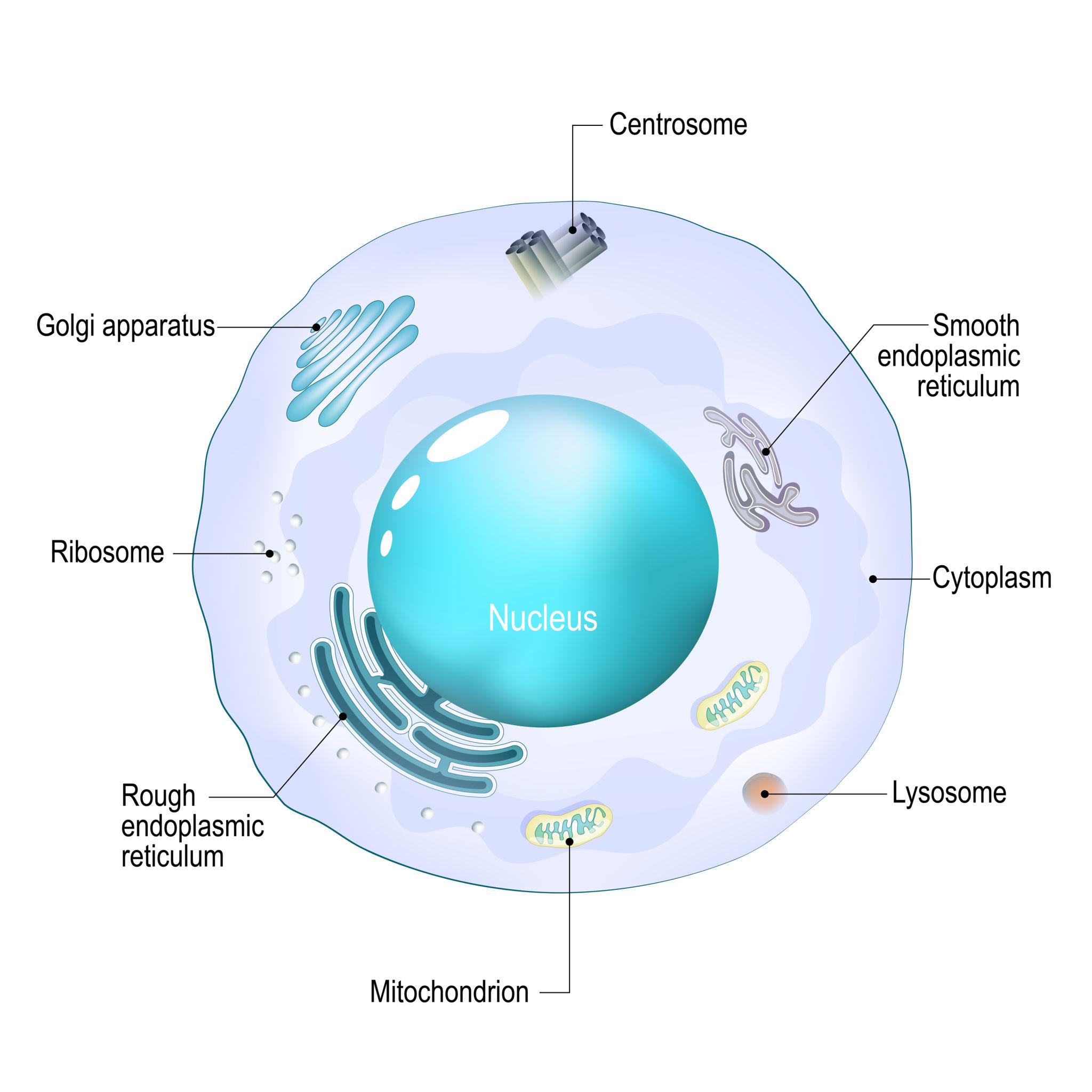
🔍 Fig 5.0 – Anatomy of an animal cell with organelles
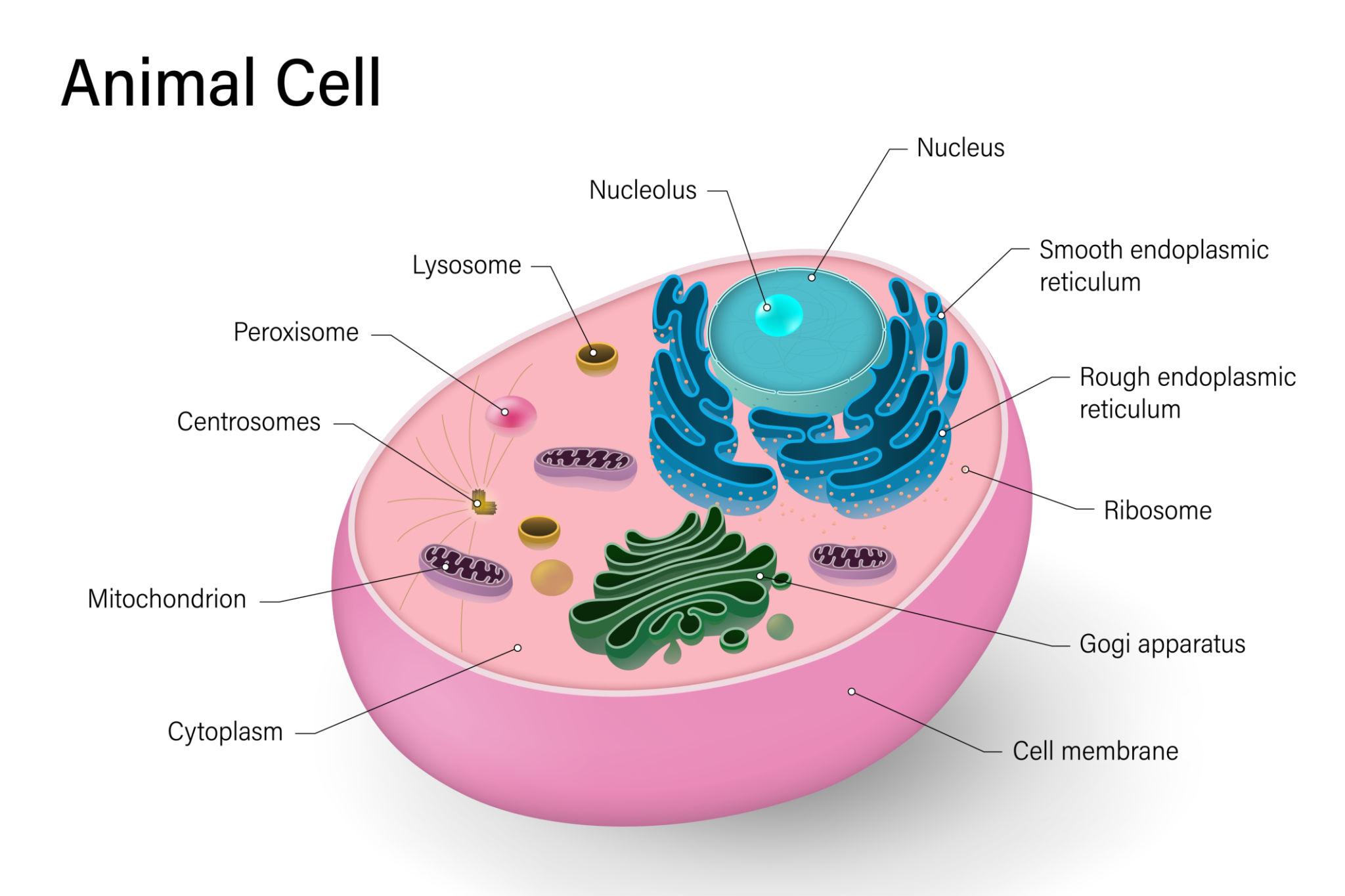
🔍 Fig 5.1 – Animal cell ultrastructure (important for NEET diagram based Qs)
🔥 6. Important Points for NEET (High Yield)
- Who gave cell theory? Schleiden & Schwann (1838-39); Virchow added "Omnis cellula-e cellula".
- Largest cell – Ostrich egg; Longest cell – Nerve cell; Smallest cell – Mycoplasma (also lacks cell wall).
- Cell theory does NOT apply to viruses, viroids, prions.
- Robert Hooke observed dead cells; Leeuwenhoek observed living cells.
- Nucleus discovered by Robert Brown (1831).
- All cells arise from pre-existing cells – Virchow (1855).
- Mitochondria and chloroplasts have their own DNA (circular) and 70S ribosomes – support endosymbiosis.
⚠️ 7. Common Mistakes Students Make (Avoid These!)
- ❌ Thinking that all cells have a nucleus – prokaryotes lack nucleus.
- ❌ Confusing Schwann (zoologist) with Schleiden (botanist) – easy swap.
- ❌ Believing cell theory states “cells arise spontaneously” – Virchow corrected that.
- ❌ Saying viruses are living – they are acellular and inert outside host.
- ❌ Ignoring exceptions like mycoplasma (smallest cell, no cell wall).
- ❌ Mixing up 70S and 80S ribosomes: prokaryotes have 70S, eukaryotes have 80S in cytoplasm.
⚡ 8. Quick Revision Summary (One-Liners)
Hooke (1665) – Leeuwenhoek (1674) – Brown (1831) – Schleiden (1838) – Schwann (1839) – Virchow (1855).
Schleiden (plants), Schwann (animals), Virchow (division).
Viruses, viroids, prions, first cell origin, mycoplasma.
❓ 9. Frequently Asked Questions (NEET 2026)
Generally, Robert Hooke (father of cytology) but some consider Leeuwenhoek. For NEET: Hooke discovered cell, but Schwann & Schleiden gave cell theory.
It means all cells arise from pre-existing cells, disproving spontaneous generation. Proposed by Rudolf Virchow.
They lack protoplasm, cannot reproduce independently, and have no metabolism. They are considered acellular.
Yes, they are cells – they have a cell membrane, cytoplasm, and genetic material. They just lack a nucleus.
Robert Brown in 1831, while studying orchid cells.
📚 10. Must-have Notes & References (Toppers' Resources)
➡️ Physics NEET Toppers Notes (Full Syllabus)
➡️ Chemistry NEET Toppers Notes (Chapter-wise)
➡️ Biology NEET Toppers Notes (Class 11 & 12)
🔗 NCERT Biology Class 11 – Chapter 8 (Cell: Unit of Life)
🔗 Encyclopædia Britannica – Cell Theory Overview
Primary keyword: Cell Theory Explained · Secondary keywords: cell theory notes for neet, prokaryotic and eukaryotic cells, exceptions to cell theory, neet biology 2026.

 Continue with Google