
Medicine Introduction & Cardiac System Notes for MBBS
Medicine Introduction: A Comprehensive Guide for MBBS Students
⚕️ High‑yield notes on Introduction to Medicine – clinical approach, history taking, physical exam, major systems, and diagnostic reasoning. Includes detailed cardiac system diagram.
📑 Table of Contents
- 1. Overview
- 2. Branches of Medicine
- 3. History Taking
- 4. Physical Examination
- 5. Diagnostic Reasoning
- 6. Introduction to Major Systems
- 7. Principles of Treatment
- 8. Clinical Reasoning Process
- 9. Clinical Correlation
- 10. High‑Yield Exam Points
- 11. Mnemonics
- 12. Frequently Asked Questions
- 13. Quick Revision Summary
- 14. Conclusion
- 15. Recommended Resources
🔬 Overview / Introduction
Medicine is the science and practice of diagnosing, treating, and preventing disease. It encompasses a broad range of approaches, from bedside clinical skills to evidence‑based pharmacotherapy. For first‑year MBBS students, understanding the foundations of clinical medicine is essential before diving into system‑specific pathology.
This guide provides a structured introduction to the clinical method, history taking, physical examination, and the principles that underpin internal medicine. It is designed to be high‑yield and exam‑focused.
🏛️ Branches of Medicine
Internal medicine is the core, but it subdivides into several specialties:
- General Internal Medicine: comprehensive care for adults.
- Cardiology: heart and blood vessels.
- Pulmonology: lungs and respiratory tract.
- Gastroenterology: digestive system.
- Nephrology: kidneys and electrolyte balance.
- Endocrinology: hormones and metabolism.
- Hematology: blood and its disorders.
- Infectious Diseases: microbial infections.
- Rheumatology: autoimmune and joint diseases.
- Neurology: nervous system (often considered separate but closely related).
🗣️ History Taking – The Foundation
A thorough history is 70‑80% of the diagnosis. Key components:
- Chief complaint: patient’s main reason for visit.
- History of Presenting Illness (HPI): onset, duration, character, radiation, associated symptoms, modifying factors, temporal pattern, severity (use OPQRST or SOCRATES).
- Past medical history: comorbidities, surgeries, hospitalizations.
- Drug history: current medications, allergies.
- Family history: genetic predispositions.
- Social history: smoking, alcohol, occupation, travel.
- Review of systems: systematic checklist to uncover other symptoms.
🩺 Physical Examination
The classic sequence: inspection, palpation, percussion, auscultation. Each system has specific maneuvers.
- General survey: vital signs (BP, HR, RR, temperature, SpO₂), general appearance.
- Cardiovascular: JVP, palpate apex beat, auscultate heart sounds (S1, S2, murmurs).
- Respiratory: chest expansion, percussion note, breath sounds, adventitious sounds.
- Abdominal: inspection, auscultation for bowel sounds, palpation for tenderness/organomegaly, percussion.
- Neurological: mental status, cranial nerves, motor, sensory, reflexes, coordination.
🧠 Diagnostic Reasoning
After gathering data, the clinician formulates a differential diagnosis – a list of possible conditions. This is prioritized by probability and urgency. Investigations (labs, imaging) are chosen to confirm or rule out leading hypotheses. The process is iterative: new data refines the list.
💡 Key principle: common things are common – “When you hear hoofbeats, think horses, not zebras.”
❤️ Introduction to Major Systems – Cardiovascular Focus
While each system has unique features, the cardiovascular system is central. Below is a detailed cross‑section of the human heart, illustrating chambers, valves, and major vessels.
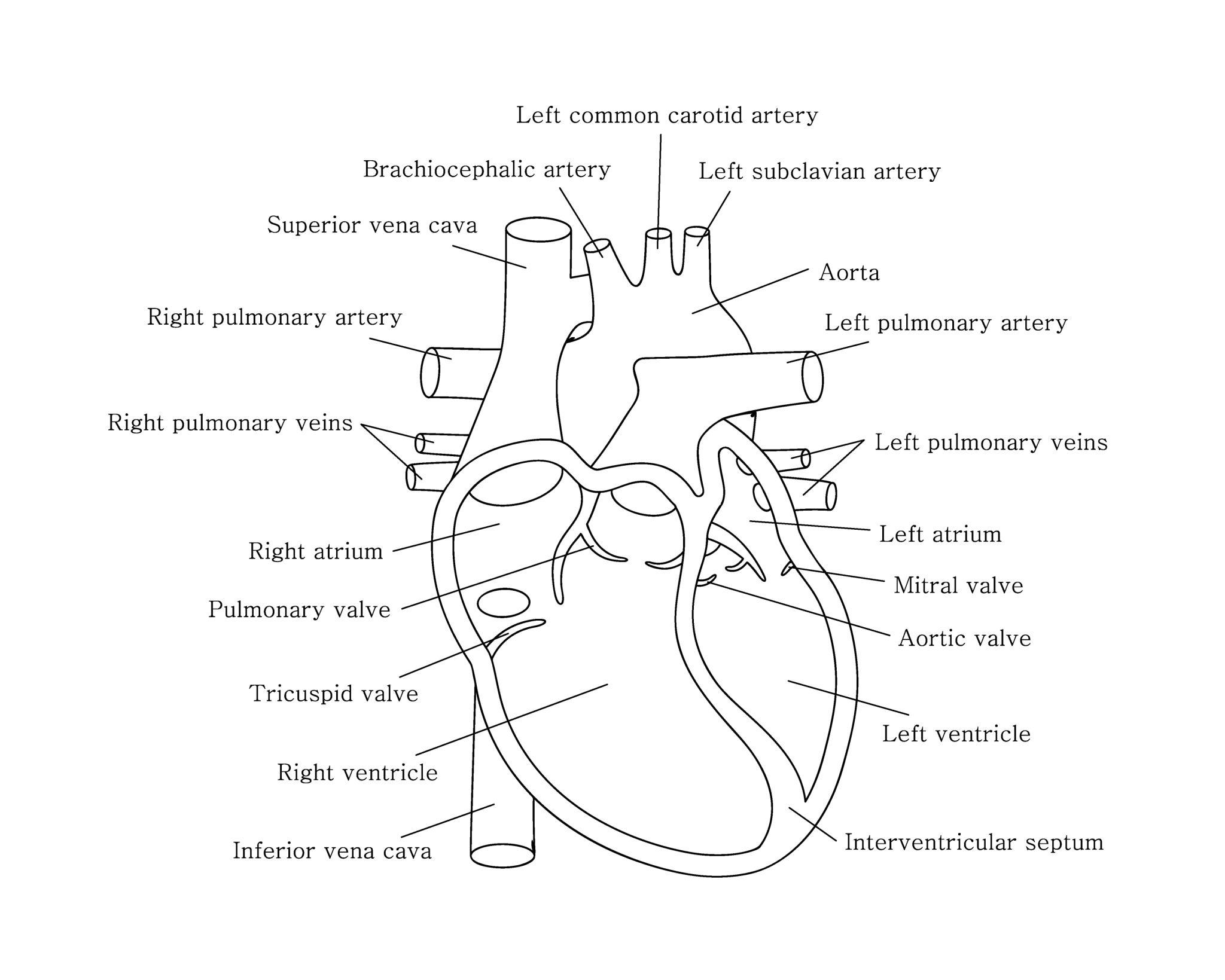
Key cardiac landmarks: right atrium, right ventricle, left atrium, left ventricle, tricuspid valve, mitral valve, pulmonary valve, aortic valve, superior/inferior vena cava, pulmonary artery, aorta, and coronary arteries.
Similarly, other systems have their own anatomy and physiology, but the clinical approach (history, exam, investigations) remains consistent.
💊 Principles of Treatment
Treatment can be:
- Curative: eradicates the disease (e.g., antibiotics for bacterial infection).
- Supportive: alleviates symptoms (e.g., analgesics).
- Preventive: vaccines, lifestyle modifications.
- Palliative: improves quality of life in advanced disease.
Always consider non‑pharmacological measures (diet, exercise, physiotherapy) alongside medications.
⚙️ The Clinical Reasoning Process
From patient encounter to diagnosis:
- Data collection: history and physical exam.
- Problem representation: summarise key features (e.g., “60‑year‑old smoker with acute onset chest pain radiating to left arm”).
- Generate hypotheses: use pattern recognition and knowledge of disease prevalence.
- Refine with investigations: order tests that discriminate between top hypotheses.
- Diagnosis: identify the most likely condition.
- Management plan: treat and monitor.
🏥 Clinical Correlation – Common Presentations
- Chest pain: consider angina (exertional, relieved by rest), myocardial infarction (persistent, with diaphoresis), pulmonary embolism (sudden, pleuritic), pericarditis (sharp, positional).
- Dyspnea: heart failure (orthopnea, PND), COPD (chronic, progressive), asthma (episodic, wheeze), pneumonia (fever, cough).
- Abdominal pain: appendicitis (periumbilical → RLQ), cholecystitis (RUQ after meals), pancreatitis (epigastric, radiating to back).
Always use the history to narrow the differential.
📌 High‑Yield Exam Points
- History HPI mnemonic: OPQRST (Onset, Provocation/Palliation, Quality, Region/Radiation, Severity, Time).
- Physical exam order: Inspection, Palpation, Percussion, Auscultation (except abdomen: auscultation before palpation).
- Vital signs: normal ranges (BP <120/80, HR 60‑100, RR 12‑20, SpO₂ ≥95%).
- Heart sounds: S1 (mitral/tricuspid closure) = “lub”; S2 (aortic/pulmonary closure) = “dub”.
- Common differentials for chest pain: cardiac (MI, angina), pulmonary (PE, pneumothorax), musculoskeletal, GI (reflux).
🧩 Mnemonics
SOCRATES for pain history: Site, Onset, Character, Radiation, Associated symptoms, Timing, Exacerbating/Relieving factors, Severity.
OPQRST (alternative for HPI): Onset, Provocation/Palliation, Quality, Region/Radiation, Severity, Time.
AMPLE for allergies/medications: Allergies, Medications, Past medical history, Last meal, Events leading.
MUDPILES for causes of high anion gap metabolic acidosis: Methanol, Uremia, DKA, Propylene glycol, Isoniazid, Lactic acidosis, Ethanol/ethylene glycol, Salicylates.
❓ Frequently Asked Questions
Q: What is the difference between a symptom and a sign?
A: A symptom is subjective (e.g., pain, fatigue) reported by the patient. A sign is objective (e.g., fever, murmur) found on examination.
Q: Why is history taking so important in medicine?
A: Studies show that history alone leads to a correct diagnosis in 70‑80% of cases, guiding further examination and investigations.
Q: What are the four main components of a physical examination?
A: Inspection, palpation, percussion, and auscultation (order may vary by system).
Q: How do you approach a patient with chest pain?
A: First, assess stability (ABCs). Then, take a focused history (OPQRST), examine vitals and cardiovascular/respiratory systems, and obtain an ECG and troponin to rule out acute coronary syndrome.
📝 Quick Revision Summary
- Medicine = science of diagnosing and treating disease.
- Clinical method: history → exam → differential → investigations → diagnosis → management.
- History components: chief complaint, HPI, past, drug, family, social, ROS.
- Physical exam: inspection, palpation, percussion, auscultation.
- Major systems: cardio, respiratory, GI, renal, neuro, endocrine, etc.
- Treatment: curative, supportive, preventive, palliative.
🎯 Conclusion
Mastering the introduction to medicine sets the stage for all clinical rotations. Focus on building strong history‑taking and examination skills – they are the bedrock of accurate diagnosis. Use this guide as a launchpad for deeper dives into each specialty.
📚 Recommended Resources
| Resource Name | Topic | Link |
|---|---|---|
| Harrison’s Principles of Internal Medicine | Comprehensive internal medicine | # |
| Bates’ Guide to Physical Examination | History & physical exam | # |
| UpToDate | Evidence‑based clinical decisions | # |
| AMBOSS | Medical knowledge platform | # |
| Osmosis | Videos & high‑yield notes | # |
| Geeky Medics | OSCE skills & clinical guides | # |
| Medscape | Drug info & clinical updates | # |
🔑 Primary Keyword: Medicine introduction MBBS notes
🔎 Secondary Keywords: clinical method history taking physical examination diagnostic reasoning cardiac system internal medicine basics
📌 Long‑tail Keywords: introduction to medicine for medical students high yield medicine notes first year how to take medical history clinical correlation examples
⚡ Last updated March 2026 – for educational purposes. Image used for teaching.

 Continue with Google